

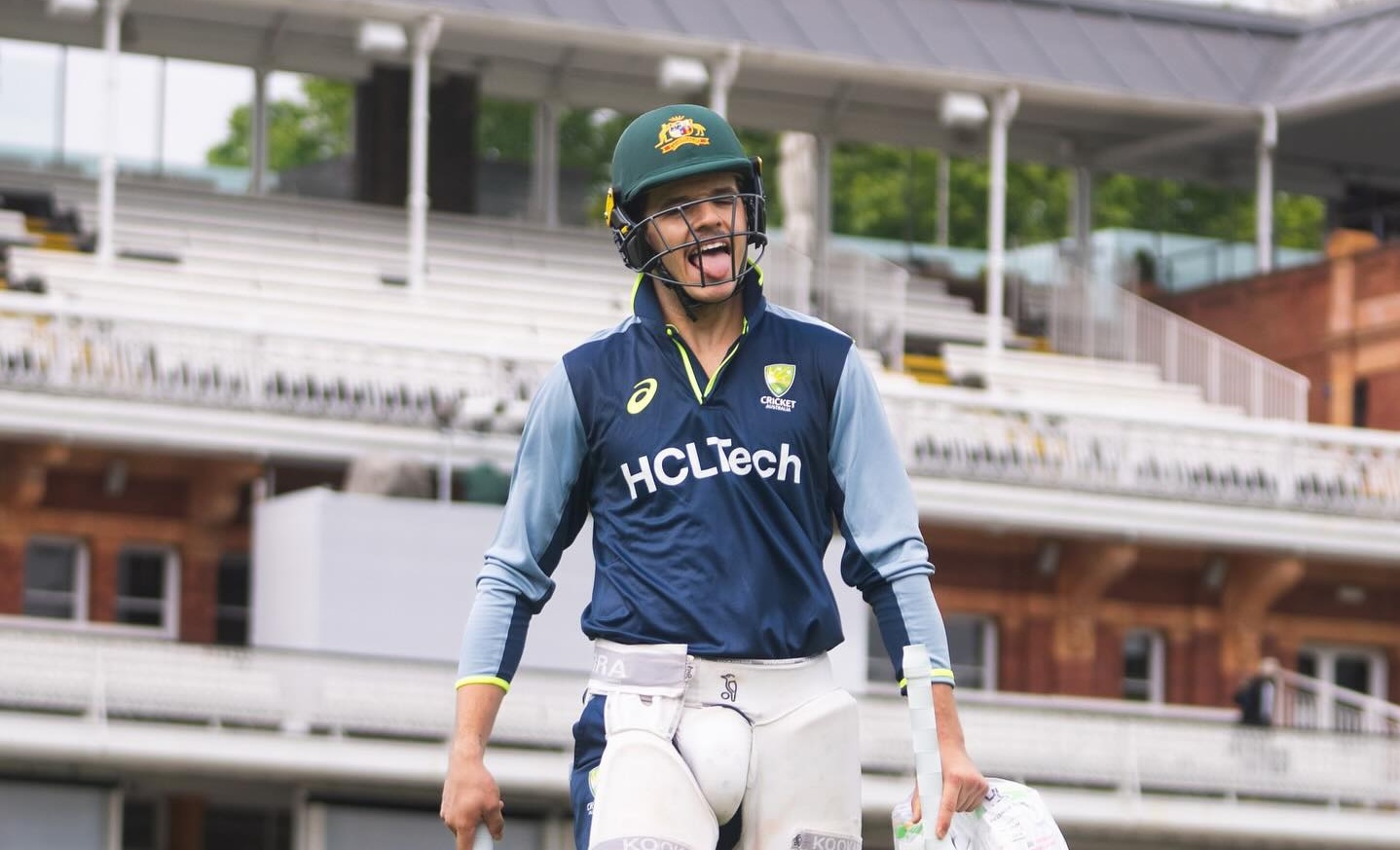
Marnus Labuschagne’s test career is done and dusted for the time being. We fans might not see him wearing the baggy green anytime soon. Maybe never, in an extreme case. Now, captain Pat Cummins and selector George Bailey have a headache after the South African tour.
So, we are looking at 4 ideal candidates to replace Labuschagne.
4. Kurtis Patterson
You would want someone with experience. Kurtis Patterson offers fans exactly that: 122 first-class games and a 39.18 average. You look at him and see his elegant stroke-play, sweet timing, domestic experience, and solid technique against fast bowling.
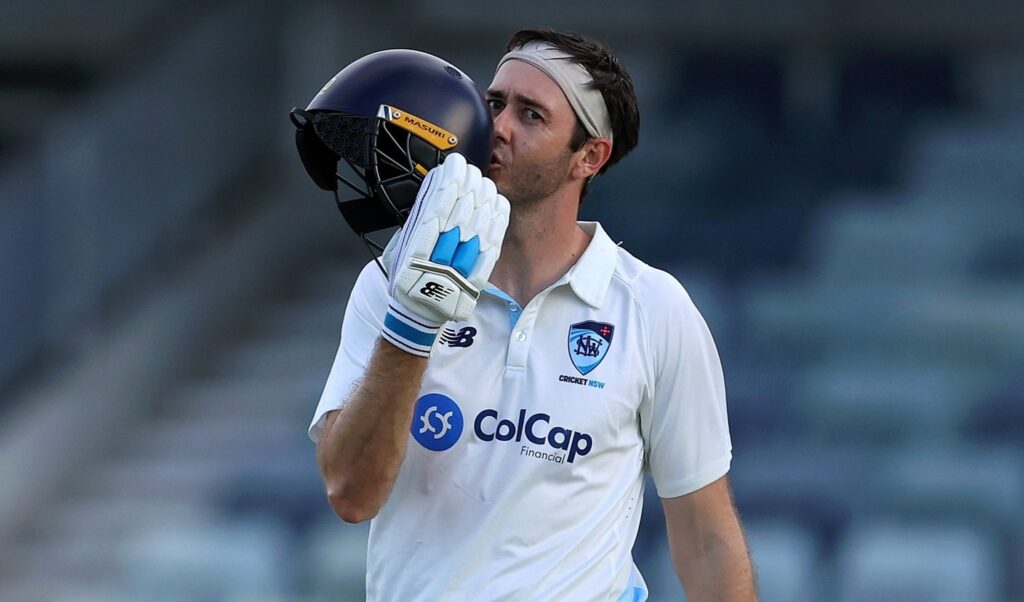
Ticking all the boxes. Not to mention he has a test hundred against Sri Lanka. When in full flow, few batters in the country look as aesthetically pleasing or as composed at the crease.
But Patterson, 33, is not going to be the long-term solution. We don’t want the already ageing team to age more. Asking the same question about number 3 a couple of years later. Not to mention his consistency issue.
His returns have fluctuated across seasons. You can make a case for him. His calm demeanour and orthodox technique anchor the middle order seamlessly. Handling the lateral movement generated by New Zealand’s seamers.
But what about the questions about his adaptability against elite spin variations? Australia will be touring India after the New Zealand series. His relative lack of exposure against subcontinent spin might expose him early in the tour.
Then, you wouldn’t want to carry left-handers’ heavy top 3. Matt Renshaw has cemented his place, partnering Travis Head. So, even when we want a comeback for the New South Wales batter, he would be below in the packing order.
3. Jack Clayton
Jack Clayton is the epitome of what we can call a hard-nosed Queensland cricketer. Clayton has a knack for dragging the Bulls out of trouble on spicy pitches. If you want someone who understands the value of a gritty innings and possesses the temperament required for gruelling Test cricket, it’s him.
Clayton, 27, also has glimpses of brilliance. 42 matches, 2,472 runs at a 38.03 average. If picked against the Blackcaps, we can see his patience wearing down the line-and-length bowling, frustrating the attack.
But then you have the Indian challenge. Left-handers face unique challenges against right-arm off-spinners (like Washington Sundar) turning the ball away from them. Clayton’s sweep shot and use of the crease will be heavily tested on turning tracks in India.
We fans would like to see him get opportunities. After all, he is coming off a good Sheffield Shield campaign, with scores of 66, 37*, 104 and 10* in the last 2 games.
Then even if you include him, there is again the challenge. Slotting him at Number 4 or Number 5 breaks up the left-hand heavy monopoly of the Australian top order. Disrupting opposition bowling plans.
But does Steve Smith move up to 3? What about the lower order then? These are a couple of questions that remain. Because Clayton bats at 4, with almost no experience at 3.
2. Nathan McSweeney
Nathan McSweeney is the like-for-like replacement for Marnus Labuschagne. A good first-class average of 37.80. You have to look at his recent consistency, which has put his name in the conversation. A century during the Australia A’s tour of India A. Then scores of 106, 54, and 66 in the last 3 games he played.

So, we have seen McSweeney turn himself into the ultimate team-first anchor. Having captained Australia A and starred for South Australia, McSweeney handles pressure with the poise of a veteran. His technique is built on a solid rear-guard defence. Making him difficult to dislodge during testing sessions.
But the same quality leads him to sometimes get bogged down in an ultra-defensive shell. Leading to low strike rates that fail to shift the game’s momentum.
Then we can also expect him to roll the arm and squeeze out some overs. Both taking wickets and putting some limit on the leak.
McSweeney is a natural stabiliser. Dropping him into Number 3 allows Australia to preserve their structural sequence. Without disrupting the opening pairing. He acts as the ultimate circuit breaker when early wickets fall.
McSweeney gives you peace of mind. He won’t blast you out of trouble in a session, but when the ball is hopping around corners under grey skies, he’s the guy who will leave well, wear the bruises, and bat time.
Having played pivotal knocks for Australia A against India A, McSweeney understands the subtle art of playing spin in subcontinent conditions. His low backlift and watchful eye against turning deliveries make him arguably the safest bet to survive a gruelling Indian tour.
1. Sam Konstas
Sam Konstas is the future Australian fans are looking at. Konstas, just 21, has shown fearless stroke play, exceptional back-foot game, immense hunger for big hundreds, and an unshakeable temperament against high-pace bowling.
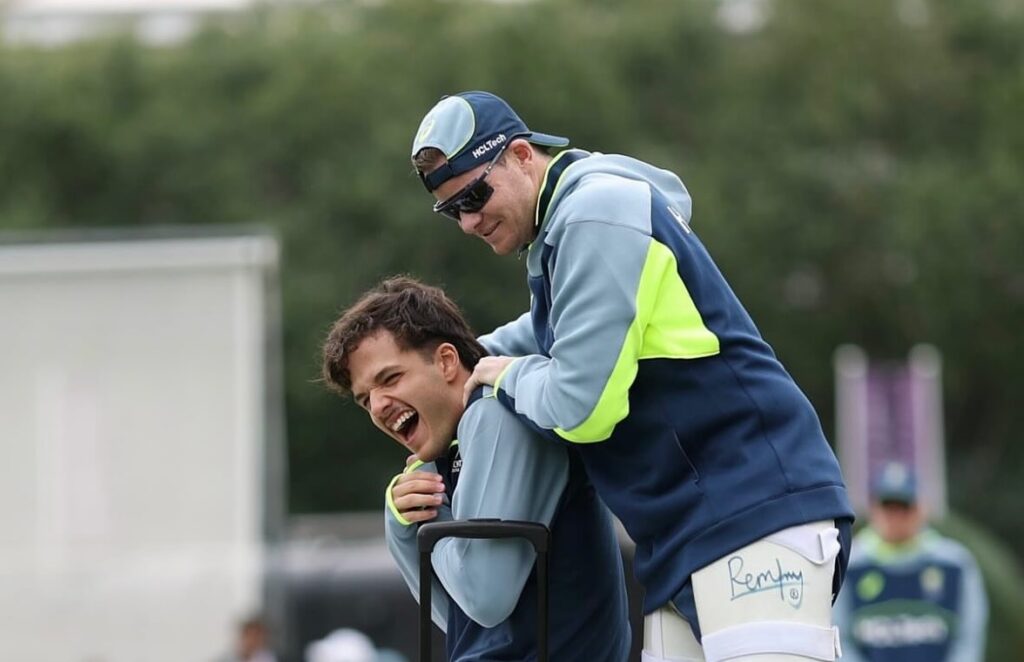
That’s what made us fall in love with him. Sam Konstas plays with a proactive intent that modern Test cricket demands. Konstas boasts a weight of runs with a strike rate hovering near 70. An exceptionally high tempo for red-ball cricket.
Sam Konstas turned heads with a majestic 151 (167) and a gritty 71 for NSW in the Sheffield Shield, alongside a booming 149 (131) in the Marsh One-Day Cup.
New Zealand’s swing-heavy attack spearheaded by Matt Henry will test Konstas’s technical patience outside off stump. However, if he survives the initial probing spell, his ability to score the square of the wicket will dismantle their plans.
Facing India’s spin-heavy and relentless line-and-length attack on turning subcontinent tracks will be a trial by fire. If Sam Konstas slots straight into Number 3, expect him to play aggressively against the second new ball, forcing captains to spread fields instantly.
He plays like a modern-day trailblazer. But his tendency to fish outside early means he’s either going to score a breathtaking 80 off 90 balls or nick off before the paint on the pitch dries.
But you give him a couple of years, play McSweeney, and then let Sam Konstas have a go at 3 for almost a decade. A couple of years will also allow Konstas to gain experience and temperament to play the situation, not his mindless slog.
Also Read: The ICC, Afghanistan Premier League and Women’s Cricket: A Story More Complicated Than It Looks